Walk into a good shaving store and every shelf tells a story. The tub of soap that smells like a barbershop in Montreal. The aftershave that tames a winter windburn. The straight razor in the glass case that looks like it could pass from one generation to the next. If you have ever wondered what turns raw steel into a face-friendly edge, and why one blade glides while another grabs, the answers live in a web of metallurgical choices, manufacturing discipline, and what amounts to a quiet branch of biology: stubble science.
I have spent two decades buying steel, working with grinders and heat treaters, and troubleshooting complaints from barbers and home shavers from Toronto to Tofino. This is the view from the factory floor and the retail counter, where grams of force and microns at the edge meet the morning rush to look presentable.
Where a razor begins: choosing the steel
The single most consequential decision in a shaving company’s life is which steel to bet on. A disposable razor, a safety razor blade, and a hand-ground straight razor each demand different balances of hardness, toughness, corrosion resistance, and workability. There is no perfect alloy, only trade-offs that suit a purpose and a budget.
When we source for our straight razor line in Canada, we start months ahead of production, sometimes a year if we need a melt with atypical chemistry or thickness. Mills in Sweden, Germany, and Japan dominate this niche. The old Solingen traditions still matter, but the best steels today are as likely to come off a precise continuous caster in Austria or a state-of-the-art line near Sandviken as from any romantic furnace. For stainless razors and disposable blades, strip steel between 0.06 and 0.30 millimeters thick is the norm. For carbon steel straight razors, we order bar or thick strip to be ground and hollowed.
Most classic straight razors use high carbon steels that can take a keen edge at relatively low included angles. O1 and 1095 remain common in small shops because they heat treat predictably and grind cleanly. European makers favor formulations akin to 1.2210 or proprietary high carbon blends that push hardness up a notch. Stainless straights have grown in popularity too, and here AEB-L or 13C26 equivalents are the workhorses. These steels were born for razor blades. They let you push hardness to the low 60s on the Rockwell C scale while staying fine-grained enough to take a hair-splitting edge.
For double-edge blades and true disposable razor cartridges, martensitic stainless takes center stage. Think of variants in the 420 family for structural parts and 13C26-like compositions for the cutting edge. You can sputter-coat them with chromium, platinum, diamond-like carbon, or PTFE films to tune friction and longevity. The unglamorous part is the yield you get from the strip after blanking and the stability of the edge during heat treatment. https://www.linkedin.com/company/the-classic-edge-shaving-store/ If the strip camber wanders or the tempering oven drifts by even 10 degrees Celsius, the difference shows up in customer emails the next week.
Below are five steels we spec often, and what they tend to offer when turned into a shaving edge.
- AEB-L or 13C26 class: Fine carbide structure, excellent for very acute edges, stainless with real-world corrosion resistance, typically HRC 59 to 62 in razors. O1: Forgiving to heat treat, very fine edge capability, patinas rather than stains if cared for, HRC 60 to 63 is attainable but toughness drops at the top end. 1095: Simple and clean, fast to sharpen, takes a fierce edge, prone to rust if neglected, often tempered to HRC 60 to 62 for straights. 52100: Higher hardenability, great toughness for the hardness, polishes well, carbon steel maintenance required, HRC 60 to 64 depending on recipe. N690/440C class: Corrosion resistant, a touch coarser carbides than AEB-L at equal hardness, sturdy in wet barbershop cycles, typically HRC 58 to 60 in razors.
These numbers move depending on the heat treater and the batch. We have run the same nominal AEB-L through two different cryo profiles and seen a full point and a half of Rockwell variation. In the hand, that difference feels like a blade that sails through day one and a sibling that starts tugging by day three.
Buying steel is logistics wrapped around metallurgy
Once you settle on the alloy and form factor, the work gets surprisingly bureaucratic. A shaving company ordering strip steel for disposable razor production is buying coils by the hundreds of kilograms. A small straight razor maker might be buying a few dozen bars or a master coil to slit into narrow ribbon for blanks. The mill wants forecasts, the slitter wants minimum order quantities, and the freight broker wants to know if you have a dock.
Importing to Canada adds a layer of detail. We match HS codes, ensure the mill test reports detail chemical composition and mechanical properties, and confirm the heat and lot numbers will survive every handoff. A mislabeled coil can sit in a bonded warehouse for a week, which in a tight production schedule can mean late deliveries to a barber supply store that planned its fall display around your launch. If you sell a straight razor in Canada, you also learn quickly about humidity. Summer containers that sat at anchor off Vancouver introduce moisture into packaging. We switched to vapor corrosion inhibitor paper and added a film of camellia oil to every blade after a week where light freckles appeared on fifteen finished razors shipped east.
On stainless strip, flatness is king. The grinders can adjust for a hint of camber, but a wavy coil wastes hours. We insist on tight flatness tolerances and temper conditions that suit grinding. For carbon bar, we specify cleanliness. Non-metallic inclusions that are a shrug in a pry bar become a chatter point at a 17 degree inclusive bevel.
Heat treatment: where edge potential is set
Every blade’s destiny is decided in a controlled dance of time and temperature. You can fake polish, you cannot fake microstructure. For carbon steels like O1 or 1095, we target austenitizing temperatures in the 790 to 820 Celsius range, quench in fast oils or engineered quenchants, then temper twice to relieve stresses. Some makers add a cryogenic cycle down to minus 80 to minus 196 Celsius between quench and temper to reduce retained austenite. The result is a tempered martensite matrix with carbides small and evenly distributed enough to support a crisp apex.
For AEB-L and its cousins, the playbook shifts. We go hotter on the austenitize, typically 1040 to 1080 Celsius depending on section thickness and desired hardness, then plate quench or interrupted oil for speed without warpage, cryo to chase retained austenite below 10 percent, then temper around 150 to 200 Celsius. If we overshoot the austenitize or skimp on cryo, the edge crumbles early or never achieves that unmistakable glass-on-skin feel. When it goes right, the edge holds a low cutting force across multiple shaves with less wire edge formation during honing.
Disposable razor steel runs in continuous lines, which change the emphasis. Uniformity across kilometers of strip matters more than maximizing individual blade potential. The target is a tight hardness band and predictably low friction after coating. This is where the relationship with the mill shaving store pays off. A line operator who calls when the nitrogen content nudges up on an otherwise in-spec heat can save a week of debugging at your plant.
Grinding and geometry: hollow, wedge, and micro-bevels
Steel gets you the capacity for sharpness. Geometry decides how it uses that capacity on a human face. For straight razors, we grind hollows that balance travel across the honing stones with stiffness in the cut. Full hollows flex and sing, which barbers love for feedback. Quarter hollows stay stiffer and forgive a heavy hand. Most of our straights leave the factory with an inclusive bevel angle in the 16 to 20 degree range, measured at the very apex after finishing. An experienced honer can feel the difference on the stone as the slurry lifts. At 16 degrees the edge threatens to bite into whiskers with almost no pressure, but it needs a steady touch on coarse beards. At 20 degrees longevity rises, and comfort holds if the finish is immaculate.
Safety razor blades and cartridges wear micro-bevels layered like roof shingles. A primary thin bevel meets a tiny secondary bevel that stabilizes the apex and makes industrial stropping efficient. Coatings applied afterward reduce the coefficient of friction, which shavers read as glide. Chromium and platinum thin films harden the surface. PTFE and other fluoropolymers lower initial cutting resistance. On a benchtop tribometer, we see reductions in sliding friction by 20 to 40 percent after coating, but the bigger benefit shows up as less skin irritation because the blade needs less force to initiate the cut.
One caution from the production side: final stropping angles matter more than most assume. Over-stropping on a buffing wheel for even a few seconds rounds an apex enough to push a shave from sublime to scratchy. We train operators to read the edge under dark field microscopy and to stop two moments before instinct says the polish is perfect. Perfect on a microscope can feel mushy on a jawline.
Testing edges without cutting faces
Before any edge touches a customer, we measure sharpness and stability. There are simple shop tests and instrumented tests that give numbers you can track across batches. The hanging hair test that honers love tells you if an apex is clean and continuous. Running a thumb pad lightly across the edge gives a feel for bite. Both rely on trained hands, which do not scale.
In a lab, we use test media that translate to grams of force or relative units. The BESS scale has become a useful common language. Typical kitchen knives read 200 to 350 on BESS out of the box. Our straight razors tend to test in the 60 to 120 range after finishing. Double-edge blades land in a similar band, with a narrower distribution thanks to automation. A day of test shaves will always matter, because hair and skin are the real substrates. Still, having a number that drifts upward when a furnace coil ages or a grinding belt changes supplier saves time and embarrassment.
We also run corrosion and humidity soaks to catch finishes that look pretty but fail in a steamy bathroom. Carbon steel straights will spot if neglected, that is part of the contract, but they should not show freckles from a single damp morning. Stainless disposables should shrug off a week on a shower shelf. If they do not, the passivation bath or the rinse protocol needs attention.
Stubble science: what your beard is really doing
People throw around the idea that beard hair is as tough as copper wire. That analogy lands because beard hair feels stubborn, but it is not precise. Human facial hair varies widely. Diameters range somewhere between 50 and 100 microns for most men, with outliers both thinner and thicker. The cuticle scales that sheath the hair affect friction against skin and blade. Hydration changes the picture dramatically. Soaking whiskers in warm water for even two or three minutes softens them, not because keratin dissolves, but because water plasticizes the outer layers and reduces the force needed to shear the hair. We have measured cutting forces on standardized test hair bundles before and after a hot towel treatment. The drop in initial cutting force is often a third or more, which mirrors the old barbershop wisdom about preparation.
Grain direction along the face changes the effective angle of attack. On the neck, where growth swirls or runs sideways, the same pressure can push the hair flat instead of shearing it. That is why some shavers swear by a three pass routine, with the grain, across, then against once the field is cleared. The anatomy of follicles on the chin and upper lip, where hair emerges denser and with a higher proportion of coarse shafts, challenges edges and tests coatings.
Sensitive skin adds another variable. The stratum corneum on the cheeks can range from paper thin after a retinoid regimen to robust in someone who works outdoors. An edge that reads safe and comfortable in our test shaves might feel harsh to a customer with compromised barrier function. We learned to send first-run straights to a panel that includes a mix of skin types and beard densities. Lab numbers pointed us in the right direction, but it was the feedback from a barber with wiry growth and a client with rosacea that sent us back to polish and stropping for a few tenths of a micron more smoothness at the apex.
Here are the big stubble and skin variables we watch when matching edges to users.
- Hair diameter and density: thicker, denser beards need stability at the apex and benefit from slightly higher bevel angles. Hydration level: pre-shave soak or shower time changes cutting force more than any single product. Grain direction and contour: tricky neck swirls ask for milder geometry and very low friction coatings. Skin barrier condition: sensitive or compromised skin prefers blades with smoother finishes and less tooth at the apex. Shave cadence: daily shavers often prefer keener, thinner edges, while those who go two to three days need a touch more robustness.
These are not absolutes. Preferences defy rules, and part of the craft lies in reading a face and recommending the right tool. A good barber supply store teams up with brands that can explain why a blade feels the way it does, not just how it is marketed.
Straight razors, safety blades, and disposables: different tools, different contracts
If you sell a straight razor in Canada, you learn your customer base intimately. There is the hobbyist who hones on JNats and argues about slurry dilution. There is the barber who needs a dependable edge for fifteen clients a day and chooses a shavette to meet health regulations. And there is the person who wants a piece that feels heirloom worthy, easier on the skin than cartridges, and satisfying to learn.
A straight razor demands care and rewards it with longevity and control. Properly heat treated and maintained, a carbon steel straight can go decades. Oil it lightly, avoid storing it wet, and refresh the edge on a strop and stones as needed. The geometry remains personal. Some prefer a full hollow that sings, others a quarter hollow that dampens. In retail, when fitting a customer looking for a straight razor in Canada, we ask simple questions: beard coarseness, skin sensitivity, willingness to learn honing. Those answers guide the choice more than price.
Double-edge safety blades are democratizers. They offer repeatable factory edges in affordable packs. We can produce them in large volumes with tight sharpness distributions. Coatings create distinct personalities. One line might run a little sharper and less forgiving, another a notch smoother. The handle and head geometry of the razor they sit in also matters, but from a blade point of view, you aim for consistent initial sharpness and a graceful decline over three to seven shaves for most users.
The disposable razor remains the convenience champion. When someone says disposable razor these days, they often mean multi-blade cartridges with pivots, lubricating strips, and flow-through heads. The engineering is complex, the scale is vast, and the price per unit is the battlefield. Our work on cartridges focuses on grinding consistency, coating adhesion, and structural integrity of thin stainless parts under real-world bending loads. These products serve travelers, gym bags, and households that prioritize speed. There is less romance to them, but the quality bar is high and the defects show up fast because volume magnifies small problems.
The grind behind retail: what a good shaving store relies on
A well-run shaving store forms the bridge between a factory and a person trying to tame a beard before an 8 a.m. Meeting. The best retailers vet brands for both substance and aftercare. From the manufacturing side, we support them with clear batch codes, care cards that avoid fluff, and service paths for repair or replacement when something slips through.
When we launched a stainless straight, a Toronto shop ran a pre-order list. The first batch sold out in two days, the second batch arrived with a faint burr that our final stropping should have knocked off. It took ten emails to accept that a new operator had changed the stropping compound, which interacted poorly with the stainless. We recalled those units from two stores, re-stropped, and returned them with a small bottle of oil and a note. We kept those retailers because we owned the error and fixed it in days, not months.
The communication goes both ways. Shops tell us when a line of blades feels different after a packaging change or when a soap scent clashes with an aftershave. They also translate between the enthusiast who enjoys a learning curve and the casual customer who wants clarity. When a barber supply store asks for educational material, we send cutaway diagrams and a short, pragmatic guide to blade care, not marketing fluff. The more our retail partners understand the metallurgy and the physiology, the better they can match people to products that suit them.
Packaging, compliance, and details that matter more than you think
A consumer might not think about carton board calipers or anti-tarnish wraps, but we do. Stainless blades need to be dry and stay that way. Carbon steel straights like breathable wraps that do not trap moisture but inhibit volatile corrosion. We have moved away from foam-insert displays to molded paper pulp for environmental reasons, but only after humidity tests confirmed it would not promote rust in transit across a Canadian winter.
Labeling and bilingual requirements set the rules for text size and content. If you sell oils or aftershaves alongside hardware, Health Canada has clear guidelines on ingredient listings and claims. We steer far from miracle claims and stick to use instructions, hazard statements for alcohol content, and truthful notes about what a product does. Trust takes years to build, and one recall wipes a few of those away.
Sustainability without theater
People ask if a straight razor is greener than a cartridge. The honest answer is that over a long horizon, a well-cared-for straight produces far less waste. You buy it once and maintain it. Double-edge blades are thin steel that many municipalities still struggle to recycle safely, though blade banks and scrap metal streams can help. Disposable cartridges combine metals and plastics that require specialized processes. On the factory side, we reclaim grinding swarf and scrap steel. We also pay attention to the chemistry in our polish and cleaning baths and to water use during coating and rinse cycles. The quieter wins are often about durability. A blade that gives you four comfortable shaves instead of two halves your waste without anyone changing habits.
Sourcing stories: hard lessons learned
One year, we chased a deal on a batch of stainless strip from a secondary market. The certs looked fine. The price was persuasive. The first grind revealed a coarse banding pattern halfway through the coil that had not appeared in prior samples. Edges chipped under minimal load. Our return window had closed, and the only ethical move was to scrap the entire coil and eat the loss. We tightened our policy after that: primary mills only, trusted slitters, and sample grinding before we commit.
Another time, a storm delayed a carbon steel shipment at sea. The bars arrived with slight surface oxidation under the wraps. Structurally fine, ugly to look at. We re-polished everything, oiled more aggressively, and changed the dunnage spacers we used inside crates to a kiln-dried hardwood that shed less vapor. The next shipment came through clean. Small choices up the chain often prevent big problems at the end.
How science informs a morning ritual
When you lay a straight razor on your cheek, you feel choices made months before. The bevel angle that suits your beard. The final polish that determines if the edge glides or sings. The steel that resists or embraces patina. Preparation changes everything. Soak whiskers, use a good lather, map the grain. The blade will reward you.
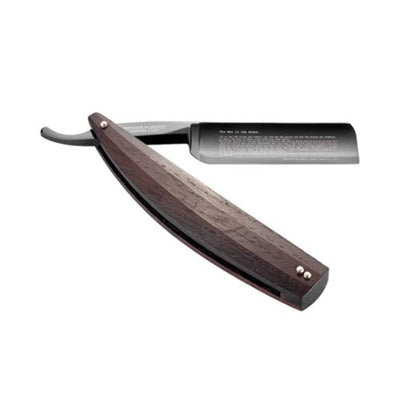
If you prefer a quick, repeatable routine, a well-made double-edge blade or a quality disposable razor can be kinder to your skin than a dull cartridge kept too long. Replace the blade on time. Rinse well. Do not drag a blade across dry skin.
When a customer in a shaving store asks whether a particular straight razor in Canada is worth the investment, my answer draws on everything here. If they like learning craft, if they value control, and if they will care for the tool, yes. The steel and the geometry can give them shaves that feel more like a skill than a chore. If they want a no-maintenance path, I steer them to a good safety razor and blades with a smooth coating profile. At a barber supply store, where health codes often point to shavettes with disposable inserts, I make sure they carry stainless options with consistent bevels and coatings that reduce irritation across dozens of faces a week.
Behind every blade is a chain of people who take pride in microns. The mill worker monitoring nitrogen in a heat. The heat treater who logs every cycle. The grinder who knows when to ease up on the wheel. The retailer who listens to a customer describe a tricky neck pattern. And the person at home who notices that the second pass on the jawline felt easier after a longer pre-shave soak. Steel and stubble meet there, and when everything goes right, you feel it before you see it.